Most crypto investors only know how to make money when prices go up. But professional traders know that markets move in both directions — and bear markets can be just as profitable as bull markets if you know how to short.
Shorting lets you profit when an asset's price falls. In this guide, you will learn what shorting is, the different ways to short crypto, and the critical risk management rules that keep beginners from getting wiped out.
What Does It Mean to Short Crypto?
Shorting (or "short selling") is the practice of betting that an asset's price will fall. When you short, you borrow the asset, sell it at the current price, and hope to buy it back later at a lower price — pocketing the difference.
In crypto, shorting is usually done through derivatives rather than actual borrowing, which makes it faster and more accessible than traditional short selling.
The Main Ways to Short Cryptocurrency
1. Futures Contracts (Perpetual Swaps)
The most common method. On exchanges like Binance, Bybit, and OKX, you can open a "short" position on a perpetual futures contract. If the price drops, your position earns a profit. Perpetual swaps also allow leverage, which magnifies both gains and losses.
2. Margin Trading
Margin trading lets you borrow funds from an exchange to open a larger position. You can use margin to short by borrowing the asset and selling it, then repaying the loan when the price falls.
3. Prediction Markets and Inverse ETFs
Some platforms offer inverse products or prediction markets that pay out when prices fall. These are simpler but often carry their own fees and risks.
How a Short Trade Works: Step by Step
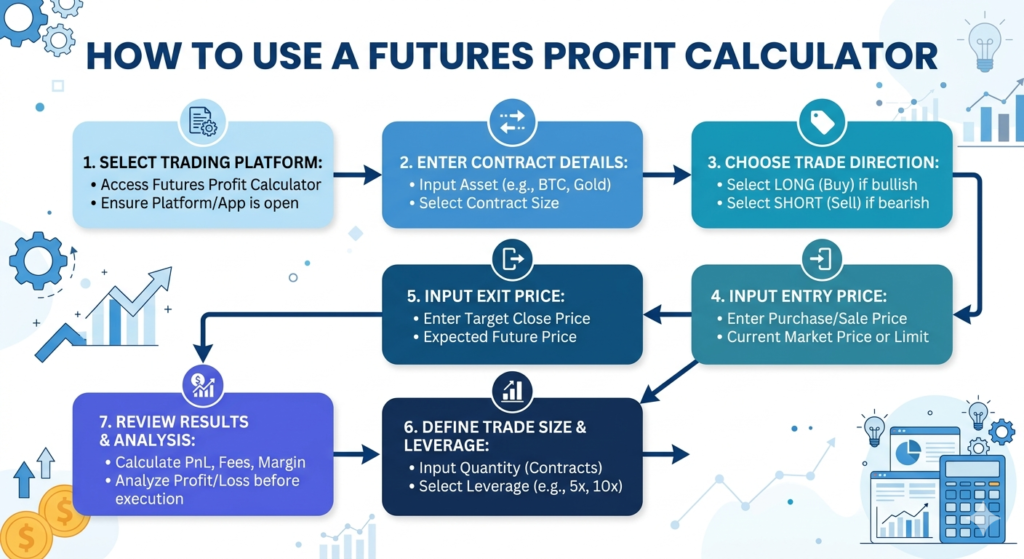
- Open an account on an exchange that supports futures or margin trading.
- Choose the asset you believe is overvalued (e.g., BTC/USDT).
- Open a short position — your entry price is locked in.
- Set a stop loss above your entry to cap losses if you are wrong.
- Close the position when the price falls to your target, realizing the profit.
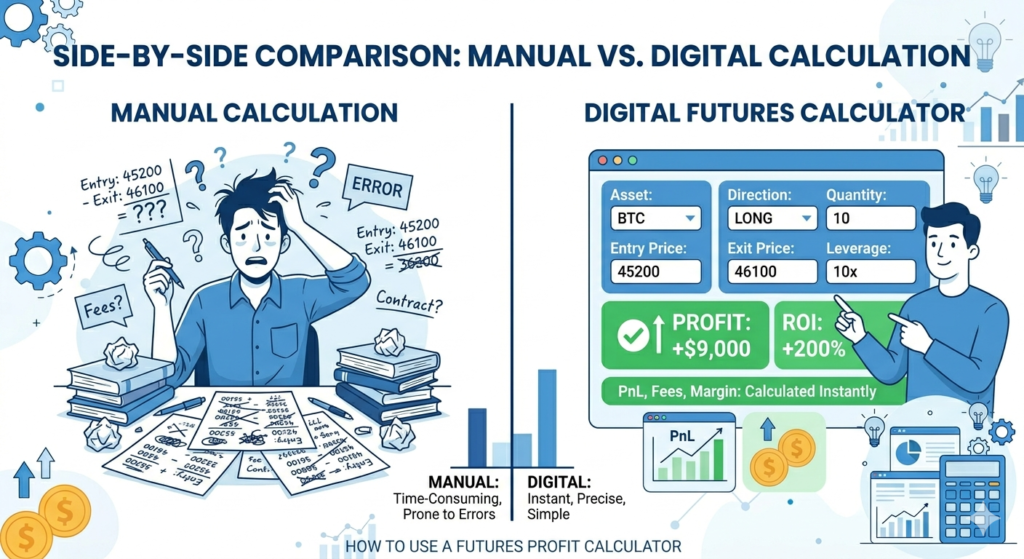
Example: you short 1 BTC at $60,000. The price falls to $54,000. Your profit is $6,000 (minus fees) before any leverage.
Understanding Liquidation: The Biggest Risk
When you trade with leverage, your position has a liquidation price. If the market moves against you and hits that price, the exchange forcibly closes your position and you lose your margin.
For a short position, liquidation happens if the price rises too far. The more leverage you use, the closer your liquidation price is to your entry. That is why risk management is everything.
Risk Management Rules for Shorting
- Always use a stop loss — shorting has theoretically unlimited risk, so a stop loss is non-negotiable.
- Use low leverage — 2x–5x is plenty for most traders; high leverage invites liquidation.
- Never short into a strong uptrend — timing is critical.
- Watch funding rates — in a crowded short, funding can turn negative, but in crowded longs, shorts get paid.
- Risk only 1–2% per trade — protect your account from a single bad call.
When Is Shorting a Good Idea?
Shorting works best in clear bearish conditions: breakdowns below key support, confirmed downtrends, or after parabolic blow-off tops. It is much harder — and riskier — to short a strong bull market. Successful short sellers wait for confirmation rather than trying to catch the exact top.
Frequently Asked Questions
Can you short crypto without leverage?+
Yes, you can short with 1x leverage on futures platforms, which is equivalent to an unleveraged short position.
What is the safest way to short crypto?+
Use low leverage, always place a stop loss, and trade only a small portion of your capital. There is no truly "safe" short — only well-managed ones.
Do I need to own crypto to short it?+
No. Futures and margin accounts let you short without owning the underlying asset.
Conclusion
Shorting crypto is a powerful skill that lets you profit in any market condition — but it comes with real risks, especially when leverage is involved. Start small, master stop losses, and treat shorting as one tool in a broader strategy rather than a shortcut to quick profits.