Bitcoin mining has evolved from a hobby you could run on a laptop into a multi-billion-dollar industrial business. The question every aspiring miner asks is simple: is mining still profitable in 2026?
The honest answer: it depends on your electricity cost, your hardware, and the price of the coin you are mining. This guide walks you through how mining profitability is calculated and the factors that decide whether it is worth it for you.
How Mining Profitability Is Calculated
Mining profitability comes down to a simple equation:
Profit = Mining Revenue − Electricity Cost − Other Costs
Your revenue depends on your hashrate, the network difficulty, the block reward, and the coin's price. Your main cost is electricity, which is why miners obsess over the price per kilowatt-hour (kWh).
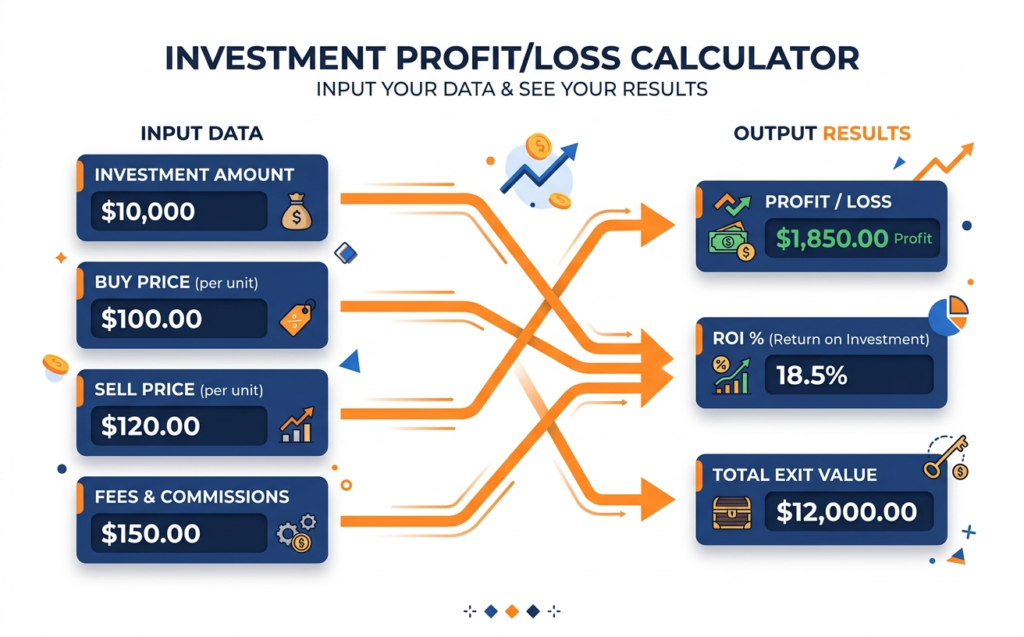
A mining calculator automates this math. You input your hardware's hashrate, power consumption, electricity rate, and pool fees, and it estimates your daily, monthly, and yearly profit.
The Key Variables That Decide Your Profit
- Hashrate — how much computing power your hardware contributes, measured in TH/s or GH/s.
- Power consumption — how much electricity your rig draws, measured in watts.
- Electricity rate — the single biggest factor. Miners with cheap power win.
- Network difficulty — as more miners join, difficulty rises and rewards per miner fall.
- Coin price — mining revenue is paid in the coin, so price swings directly affect profit.
Realistic Example: Bitcoin ASIC Mining
Let's model a modern ASIC miner with the following specs:
- Hashrate: 200 TH/s
- Power draw: 3,500 W
- Electricity rate: $0.07/kWh
- Pool fee: 2%
Daily electricity use: 3.5 kW × 24 h = 84 kWh. At $0.07/kWh, that is about $5.88 per day — roughly $176 per month in electricity alone. If the miner earns $220 per month at current difficulty, the profit is thin but positive. At $0.12/kWh, that same machine likely operates at a loss.
What Can You Mine in 2026?
| Coin | Algorithm | Hardware |
|---|---|---|
| Bitcoin (BTC) | SHA-256 | ASIC only |
| Litecoin (LTC) | Scrypt | ASIC |
| Ethereum Classic (ETC) | Ethash | GPU (older cards) |
| Kaspa (KAS) | kHeavyHash | ASIC / FPGA |
| Monero (XMR) | RandomX | CPU |
Note that Ethereum itself moved to proof-of-stake in 2022, so ETH is no longer mineable — it is staked instead.
Is Home Mining Still Viable?
For most home miners in high-electricity-cost regions, the economics are tough. Industrial-scale operations in regions with cheap hydro or stranded energy dominate Bitcoin mining. However, home mining can still make sense if:
- You have electricity below about $0.07/kWh.
- You are mining smaller coins with lower difficulty.
- You already own the hardware (sunk cost).
- You are mining to support a network rather than purely for profit.
Other Costs People Forget
- Hardware depreciation — ASICs lose value fast as newer models ship.
- Cooling and noise — heat management costs money and space.
- Maintenance and downtime — rigs break and need repairs.
- Pool fees — usually 1–3% of rewards.
Alternatives to Traditional Mining
- Cloud mining — rent hashrate from a provider, but beware of scams.
- Staking — earn rewards on proof-of-stake coins without hardware.
- Liquidity provision — earn fees by providing liquidity to DeFi pools.
Frequently Asked Questions
How much can a Bitcoin miner make per day?+
It depends on hashrate, electricity cost, and network difficulty. A modern 200 TH/s ASIC might gross $6–$10 per day before electricity, but profits vary widely.
Is crypto mining legal?+
In most countries, yes — though regulations vary, and some jurisdictions restrict or ban it. Check your local laws.
Can I mine with a normal PC?+
For Bitcoin, no — you need an ASIC. You can still mine some CPU-friendly coins like Monero, though profits are usually small.
Conclusion
Crypto mining in 2026 is a business, not a hobby — and like any business, it lives and dies on margins. Before buying any hardware, use a mining calculator, be brutally honest about your electricity cost, and factor in every expense. If the numbers still work after that, you have found a genuine opportunity.