
Crypto day trading is the practice of opening and closing positions within the same day, profiting from short-term price movements. It is fast, exciting, and unforgiving — most beginners lose money, but disciplined traders can thrive.
This guide breaks down the core day trading strategies, the risk management rules that separate winners from losers, and the tools you need to trade crypto in 2026.
Is Day Trading Crypto Worth It?
Crypto markets trade 24/7, which means opportunities never stop — but neither does the risk. Day trading requires focus, discipline, and a strategy. The reward: you avoid overnight risk and can compound small gains frequently. The cost: fees, stress, and the very real chance of losses if you trade without a system.
Core Day Trading Strategies
1. Scalping
Scalpers make many small trades, holding positions for seconds or minutes and capturing tiny price moves. Profits per trade are small, but they add up with volume. Scalping demands low fees, fast execution, and intense focus.
2. Range Trading
Range traders identify horizontal support and resistance levels and buy near support, selling near resistance. This works best in sideways markets where price oscillates in a predictable channel.
3. Breakout Trading
Breakout traders wait for price to break through a key level with volume, then enter in the direction of the breakout. Breakouts often lead to fast, large moves — but false breakouts are common, so confirmation is key.
4. Trend Following
Trend followers trade in the direction of the dominant trend, using moving averages to identify entries and exits. The idea is simple: ride the trend until it reverses.
5. News and Momentum Trading
Crypto prices react violently to news — listings, upgrades, regulatory decisions. Momentum traders buy strength or sell weakness around catalysts, acting quickly before the move fades.
The Risk Management Rules That Keep You Alive
- Risk 1–2% per trade — never bet the account on one position.
- Always use a stop loss — know your exit before you enter.
- Set a daily loss limit — stop trading after a certain loss to avoid tilt.
- Use appropriate position sizing — a position size calculator helps.
- Keep a trading journal — track every trade and review what works.
Tools Every Day Trader Needs
- A reliable exchange — low fees, deep liquidity, and fast execution matter.
- Charting software — TradingView or exchange-native charts for analysis.
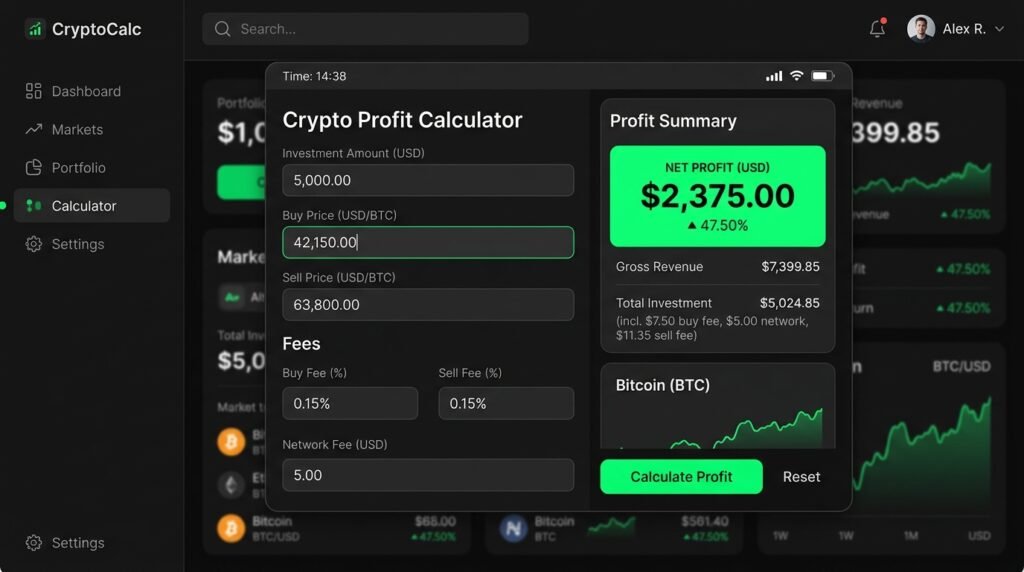
- A profit/loss calculator — know your numbers before every trade.
- News and alerts — stay ahead of catalysts that move the market.
- A watchlist — focus on a handful of liquid coins rather than chasing everything.
Common Day Trading Mistakes
- Overtrading — more trades do not equal more profit; fees eat returns.
- Revenge trading — trying to win back losses usually makes them worse.
- Ignoring fees and slippage — small costs compound across many trades.
- No plan — trading on feeling instead of a defined strategy.
Frequently Asked Questions
How much money do I need to day trade crypto?+
You can start with a small amount, but larger capital gives you more flexibility. The key is risking only a small percentage per trade, whatever your account size.
Is day trading crypto profitable?+
It can be, but most beginners lose money. Profitability comes from discipline, a proven strategy, and strict risk management over time.
What is the best time to day trade crypto?+
Volume and volatility peak during overlap of US and European trading hours. Weekends can be quieter but still active.
Conclusion
Day trading crypto is not a get-rich-quick scheme — it is a skill that takes time, practice, and discipline to develop. Start with a clear strategy, manage risk obsessively, and measure everything. The traders who survive are not the ones who win every trade; they are the ones who protect their capital long enough to let their edge play out.